Influencer Marketing Strategy for Apps: A Practical Plan
Learn how to build an app influencer strategy with clear goals, creator criteria, a reviewable brief, compliant disclosures, and approved outreach.
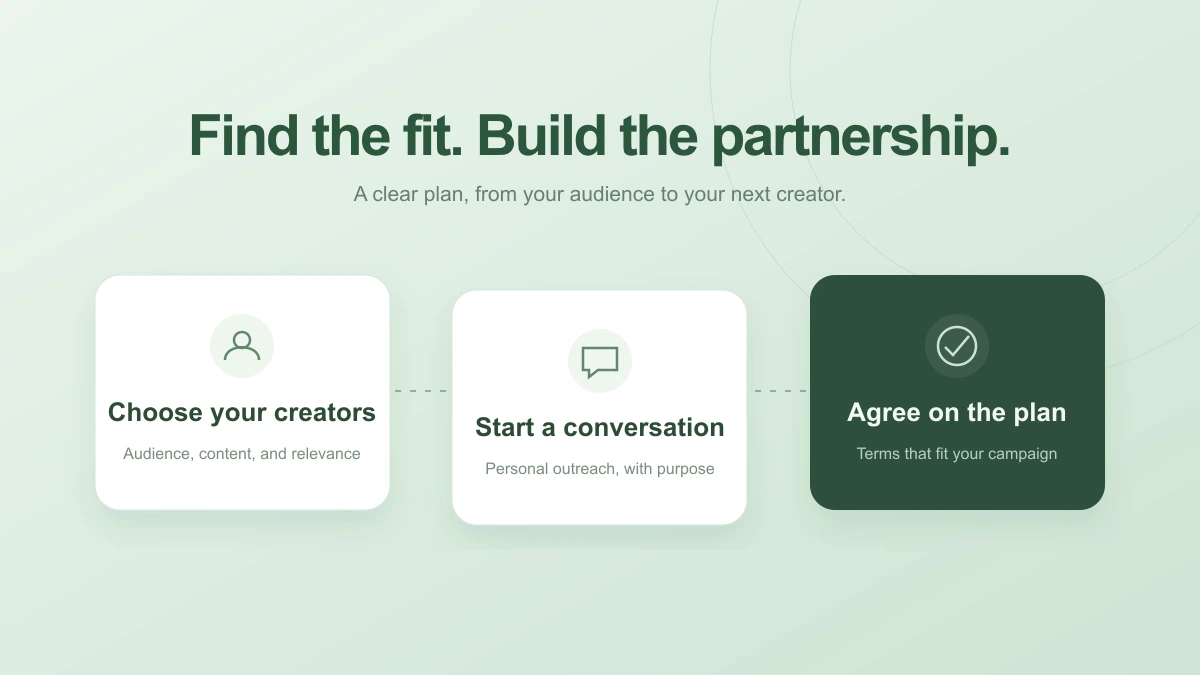
An influencer marketing strategy for an app should connect one audience problem to one useful creator story, then define how you will find, brief, review, and measure the partnership. Start with the user you want to reach. Do not start with follower counts.
This plan gives you a practical path from campaign goal to approved outreach.
1. Choose one campaign job
Write one sentence that names the change you want the campaign to create. Good campaign jobs include:
- introduce the app to a specific audience;
- show how one feature solves a real task;
- collect qualified visits to a landing page;
- test which creator angle earns useful attention;
- support a product launch or major update.
Avoid a goal such as “go viral.” It does not tell you whom to reach, what creators should demonstrate, or what you should measure.
Pair the goal with one primary action. You may ask viewers to visit a page, try a free workflow, join a waitlist, or open the App Store. Keep installs, purchases, and subscriptions separate unless you can measure them directly.
2. Define the audience before the creator
Describe the person in terms a creator can recognize:
| Question | Useful answer |
|---|---|
| What are they trying to do? | A concrete job, not a broad demographic label |
| What blocks them now? | A repeated frustration or costly workaround |
| What would count as progress? | A visible result they can understand quickly |
| Where do they already learn? | Specific formats, communities, and creator niches |
| What would make them distrust the message? | Exaggeration, jargon, hidden sponsorship, or a poor product fit |
This audience definition should guide creator selection. A smaller creator who repeatedly helps the right people can fit better than a larger account with weak relevance.
3. Build creator-fit criteria you can inspect
Create a short scorecard before you research names. Review:
- Topic fit: Does the creator already discuss the problem your app solves?
- Audience fit: Do comments and public community signals show the right people are listening?
- Format fit: Can the creator demonstrate the app naturally in their normal format?
- Brand fit: Does their tone match the way you want people to understand the product?
- Evidence quality: Can you verify the public profile, recent content, and contact route?
- Risk fit: Have you reviewed obvious conflicts, unsafe claims, and past sponsored work?
Do not turn this scorecard into a fake precision model. Use it to make your reasoning visible and consistent.
4. Write a brief that protects the story
A useful influencer brief gives the creator enough context to be accurate without scripting every sentence. Include:
- the campaign goal and primary audience;
- the product problem and verified capability;
- the required deliverables and format;
- the action you want the viewer to take;
- claims the creator may make and claims they must avoid;
- the disclosure requirement;
- usage rights and approval steps;
- the schedule and responsible contact;
- the measurement plan.
Use the free influencer brief template to turn those decisions into a copyable document. It works in your browser and does not send the information anywhere.
5. Make disclosure part of the brief
If a creator has a material relationship with the brand, the disclosure should be clear and hard to miss. The FTC’s guidance for social media influencers explains that payment, free products, discounts, employment, and personal or family relationships can create a material connection. It also says the disclosure should appear with the endorsement and use language people can understand.
Do not bury disclosure instructions in a footer. Put them beside the deliverable requirements. Ask the creator to use the same language as the endorsement, and review the actual placement before approval.
French campaigns should also account for the current national framework and professional guidance. The ARPP responsible influence resources provide a useful starting point. This article does not replace legal advice, and another market may apply different rules.
6. Research public routes, then review each message
Separate creator discovery from outreach. First verify the public profile, the reason the creator fits, and the contact route they chose to publish. Then write a short message that shows the match.
A strong first message usually contains:
- a specific reason you selected the creator;
- one sentence about the audience or problem;
- the proposed collaboration shape;
- the next small step;
- no unsupported praise, urgency, or outcome promise.
After you have defined the campaign and received real value from this plan, OutDM can help you turn an app or product URL into an editable audience brief, research matching public profiles, surface listed contact routes when available, and prepare tailored drafts for your approval. Review the evidence and approve the exact message before you use a configured sending channel.
7. Measure the decision chain
Track the campaign in layers:
- Delivery: Did the creator publish the agreed asset?
- Attention: Did people watch, read, save, or reply?
- Intent: Did qualified visitors reach the campaign page or store link?
- Product outcome: Did an event you can actually measure occur?
Do not describe an App Store click as an install. Do not describe an install as a subscriber. Keep each claim at the level your evidence supports.
Use unique landing-page links or campaign parameters where appropriate, but do not let tracking damage the experience. Your first campaign should teach you which audience, creator fit, story, and action deserve another test.
When paying customers start to come in, follow our guide to influencer marketing ROI for apps and run each creator through the free ROI calculator.
A simple strategy summary
Before you contact anyone, confirm that you can answer yes to each question:
- Can I name one audience problem?
- Can I explain one verified app capability?
- Can I show why this creator fits?
- Have I defined deliverables, rights, disclosure, and review?
- Can I verify the public contact route?
- Will a person approve the exact message?
- Can I measure the requested action without overstating the result?
If one answer is no, fix the strategy before you scale the outreach. Clear reasoning protects the creator relationship and gives your campaign a better chance to teach you something useful.
Keep building your campaign

Measure Influencer Marketing ROI for Your App
Measure influencer marketing ROI for your app: give each creator a tracked link or offer code, count paying customers, subtract every cost and compare.
Read the guide
Build an Influencer Contract Template With These 9 Clauses
Build your influencer contract template from a clause by clause checklist: deliverables, usage rights, exclusivity and the exact FTC disclosure wording regulators expect. Not legal advice.
Read the guide