Influencer Marketing Platforms: How to Choose the Right Type for Your Brand
Compare the five types of influencer marketing platforms, from discovery databases to marketplaces and managed agencies, and use a 10-question checklist before you commit to one.
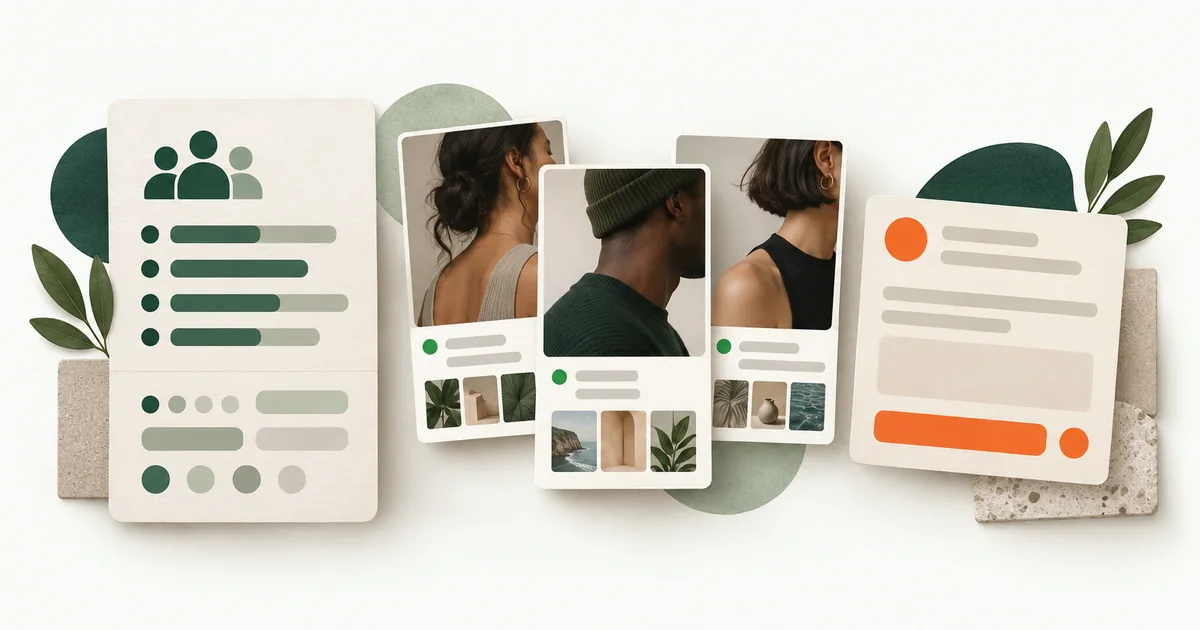
An influencer marketing platform is software that helps you find creators, contact them, manage partnerships and measure results. They come in five main types: discovery databases, creator marketplaces, relationship and campaign management suites, affiliate and gifting tools, and managed agencies with their own software. Choose by your bottleneck, not by the biggest feature list: if you struggle to find the right creators and write outreach, you need research and outreach help; if you already run dozens of partnerships, you need management, contracts, payments and reporting.
The 5 types of influencer marketing platforms
| Type | What it does | Fits you when |
|---|---|---|
| Discovery database | Searches large indexes of creator profiles by niche, audience and metrics | You know your audience and want to build your own shortlist |
| Creator marketplace | Lets creators apply to briefs you post | You want inbound interest and accept less control over who applies |
| Relationship and campaign management | Tracks contacts, contracts, content approvals, payments and reporting | You run many partnerships at once and need one system of record |
| Affiliate and gifting tools | Ships products, issues codes and tracks sales per creator | You sell online and pay creators on commission or with product |
| Managed agency service | A team runs research, outreach and campaigns for you, often with its own software | You have budget but no time or in-house expertise |
Many tools blend two or three of these. Read what each vendor documents for the specific job you need.
Start from your bottleneck
Answer three questions before you book a single demo:
- Where do you lose time today? Finding creators, writing outreach, negotiating, approving content, paying, or reporting?
- How many creators will you work with per month? Five partnerships need a different tool than five hundred.
- How will you pay creators? Flat fee per post, CPM, affiliate commission, product, equity, or a mix. Some platforms support only one model.
If your answer to question 1 is "finding the right creators and getting a reply", focus on research quality and outreach, not on reporting dashboards.
The 10-question checklist
Ask every platform these questions and write down the answers:
- Which social networks does it cover, and how does it get the data?
- How does it match creators to your audience? Can you see the evidence behind each match?
- Can you filter by market and language your product actually supports?
- Does it show contact routes, such as a public business email or DM, and where they come from?
- Does it help you write outreach, and do you approve every message before it sends?
- Which payment models does it support?
- How does it handle contracts, usage rights and disclosures?
- What does it measure, and does it separate clicks, sign-ups and sales honestly?
- Can you export your data if you leave?
- How does it treat creator data and privacy?
Red flags
- Guaranteed results. No platform can promise reach, sales or a fixed return.
- Follower counts as the main filter. Audience fit and recent content matter more. Our guide on how to vet influencers shows what to check.
- Messages that send without your review. Every first message carries your brand's name.
- No disclosure guidance. In the United States, the FTC expects creators to disclose paid or material connections clearly. Your platform and your brief should make that easy.
Do you need a platform at all?
With fewer than about ten partnerships a year, a spreadsheet, a clear influencer brief and a steady outreach routine often work. Start with our guides on how to find influencers and influencer outreach. For small budgets, micro-influencers often reply faster and fit niche audiences well.
Move to software when research and outreach take more hours than you can give, or when you lose track of who you contacted.
Match the platform to your stage
- Testing the channel: a spreadsheet, or a tool focused on research and outreach.
- Running a repeatable program: add relationship and campaign management.
- Selling online at scale: add affiliate and gifting tools.
- No team to run it: consider a managed service, and ask to see the creators they plan to use before you sign.
If you promote an app, our influencer marketing strategy for apps covers what to measure between a creator's post and an install.
Turn your product URL into outreach with OutDM
If your bottleneck is finding the right creators and writing the first message, start with your product page. Paste your app or product URL into OutDM, edit the audience brief it builds, and choose an equity, paid-post, CPM or hybrid partnership. OutDM researches matching creator profiles, shows publicly listed emails or DM routes when it finds them, and drafts tailored outreach from each creator's public evidence. You approve every draft before it sends.
Common questions
What does an influencer marketing platform do?
It helps you find creators, reach out, manage partnerships and measure results. Most platforms focus on one or two of those jobs.
Do small businesses need an influencer marketing platform?
Not always. A spreadsheet and a clear brief work for a handful of partnerships. Software pays off when research and outreach start to take too much time.
How do you measure influencer marketing results?
Use a unique link or code per creator, and track clicks, sign-ups and sales separately. Do not treat a click as a sale or an install.
What should an influencer contract include?
Deliverables, deadlines, payment terms, usage rights, disclosure requirements and approval steps. Put them in writing before any content goes live.
Sources
Keep building your campaign
Measure Influencer Marketing ROI for Your App
Measure influencer marketing ROI for your app: give each creator a tracked link or offer code, count paying customers, subtract every cost and compare.
Read the guide
Build an Influencer Contract Template With These 9 Clauses
Build your influencer contract template from a clause by clause checklist: deliverables, usage rights, exclusivity and the exact FTC disclosure wording regulators expect. Not legal advice.
Read the guide